
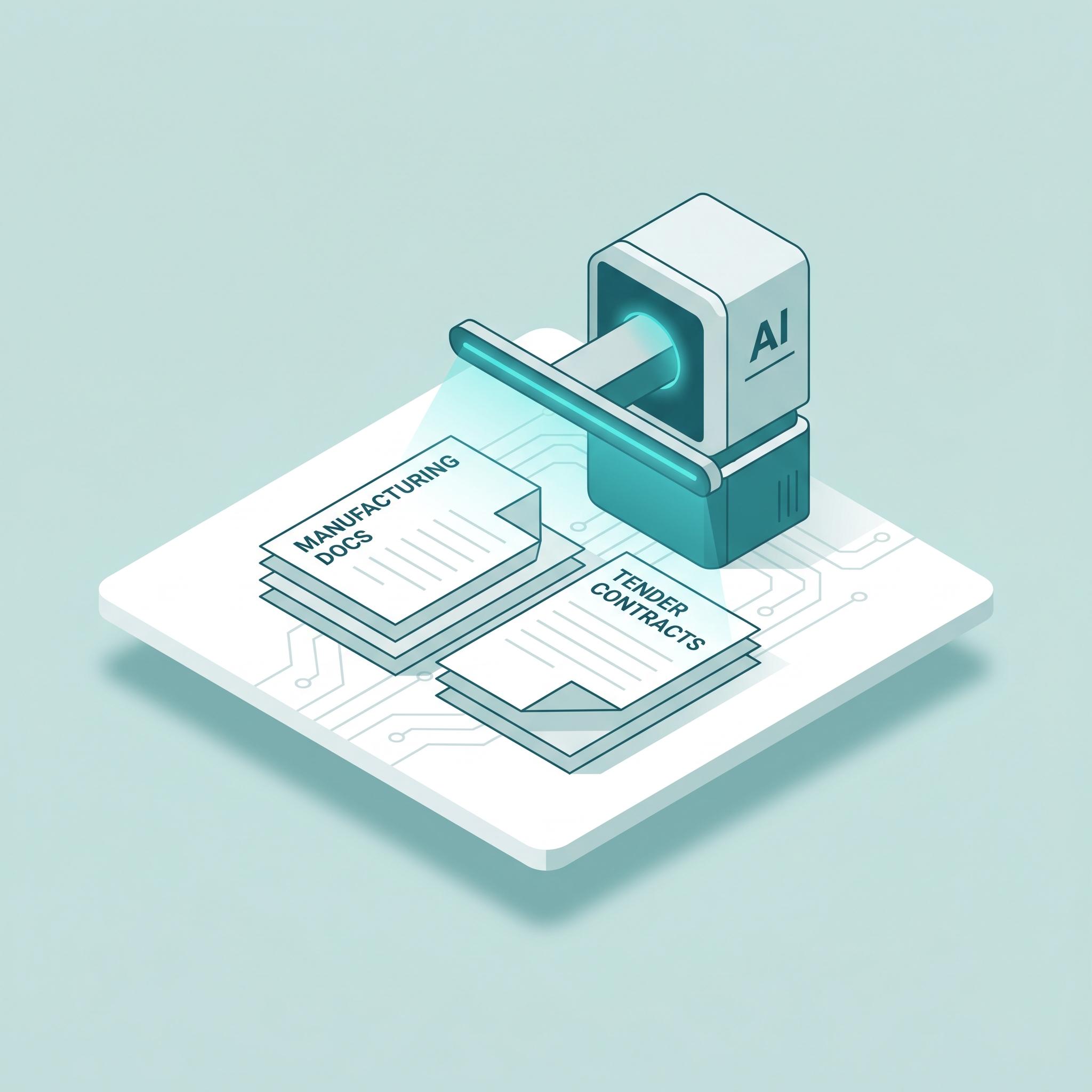
Mismatched HSN codes are a leading cause of technical disqualifications and delayed payments in PSU tenders. By automating your compliance and mapping your catalog to the buyer's exact 8-digit requirement, MSME manufacturers can secure their working capital and file accurate bids in minutes instead of days.
If you are an MSME manufacturer in India, you know the drill all too well. You spend weeks preparing for a lucrative government tender on the Government e-Marketplace (GeM), NTPC, or Indian Railways. You optimize your factory floor capacity, sharpen your pricing to outbid competitors, gather all your technical specifications, and finally hit submit. But then, you are met with silence. Or worse, you receive an immediate technical disqualification notice during the preliminary evaluation phase.
The culprit? A mismatched Harmonized System of Nomenclature (HSN) code.
From an MSME founder's perspective, this scenario is beyond frustrating. You have the manufacturing capability, the ISO quality certifications, and the most competitive price in the market. Yet, a simple clerical classification error ends up costing your company a contract worth crores. This guide is written specifically from your perspective—acknowledging the reality of the shop floor, the stress of the finance desk, and the heavy burden placed on your tender managers. We will explore how to master HSN codes, protect your vital working capital, and scale your government business predictably without getting bogged down by endless paperwork.
The Harmonized System of Nomenclature (HSN) is an internationally accepted method of classifying goods. In the Indian context, under the GST regime, it is the absolute backbone of product identification and tax compliance. But why do Public Sector Undertakings (PSUs) and government buyers obsess over these codes in their tender documents?
The answer comes down to financial compliance and the Input Tax Credit (ITC). When a PSU buyer procures industrial components, heavy machinery, or electrical supplies from your manufacturing unit, they need to claim the correct GST input tax credit. If you submit a bid with a broad 4-digit HSN code when the tender strictly mandated a highly specific 8-digit HSN code, the buyer's internal compliance system flags it as a tax risk. To avoid audits and tax mismatches on the official GST portal, PSUs will outright reject technically sound bids that have ambiguous or incorrect HSN classifications.
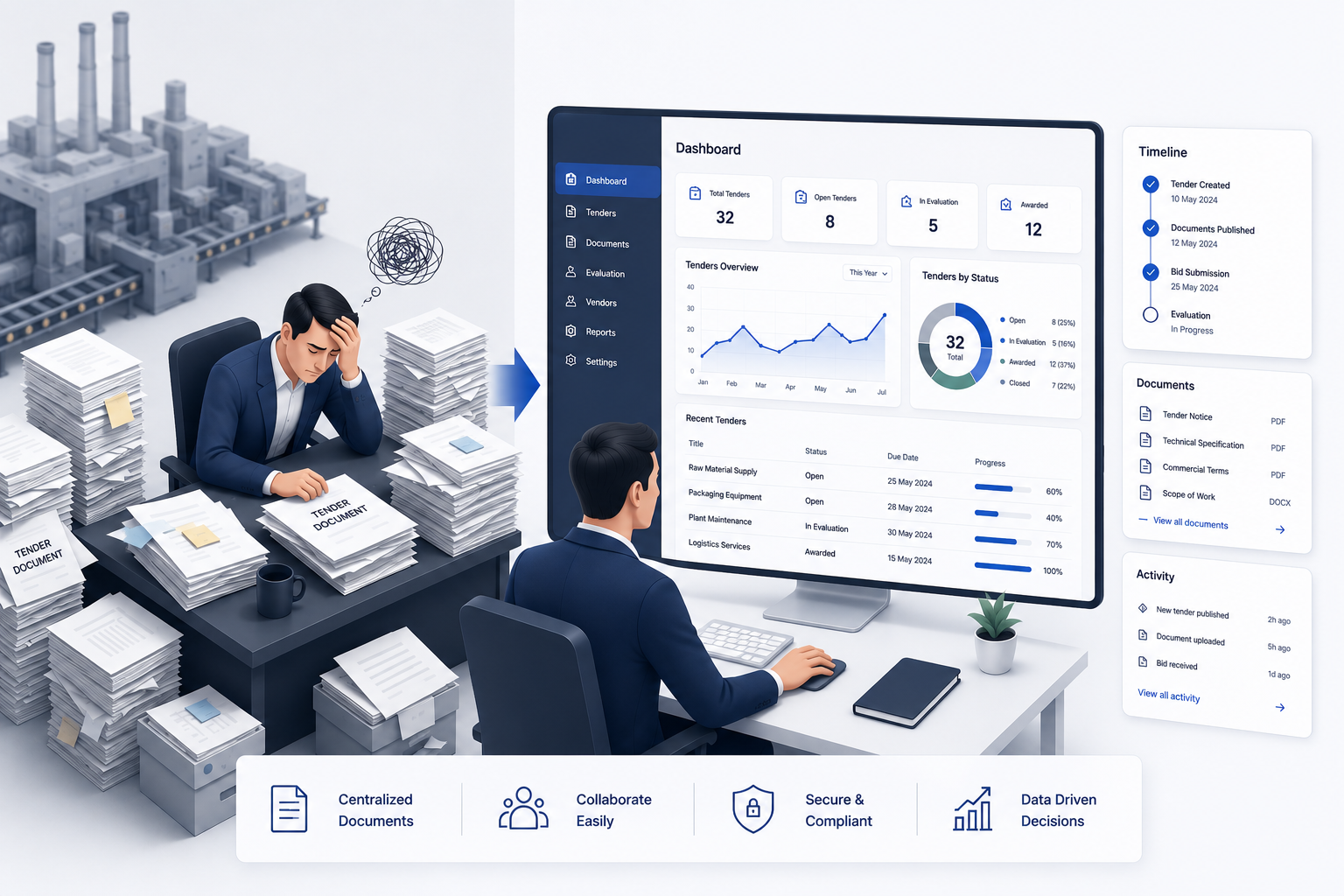
Let’s look at the operational reality for a manufacturing company with an annual turnover between ₹50 lakhs and ₹10 crore. You likely rely on a dedicated tender executive costing around ₹20,000 per month or an external consultant who charges you ₹2,000 for every single tender filing. Their day consists of manually scouring over 90 different government procurement portals including BHEL, Defence, ONGC, and the Central Public Procurement Portal (CPPP).
Once a relevant tender is found, the nightmare of manual classification begins. Your executive must use 'Ctrl+F' through massive 150-page PDF tender documents to find the exact compliance requirements. They are left guessing whether your specific product fits into one HSN category or a closely related one. The risk of human error is immense, and the opportunity cost is massive. Spending two full days just to format paperwork means you miss out on filing five other potential winning bids.
Metric | Manual Tender Desk | AI-Automated Compliance |
|---|---|---|
Time Spent per Bid | Up to 2 Days | Under 10 Minutes |
Cost Implication | ₹20k/month (salary) or ₹2k/filing | Fixed Low Monthly Subscription |
Accuracy of HSN Match | Prone to Human Error and Guesswork | 100% Data-Driven Accuracy |
Tenders Filed per Month | 5 to 10 maximum | Unlimited capacity |
For the Head of Finance, the implications of HSN errors go far beyond a rejected bid. Even if you manage to win the tender with a slightly off HSN code, the real pain begins at the invoicing stage. When the goods are delivered and the invoice is raised, the Accounts department of the PSU will match your documentation against the initial tender award.
If there is an HSN mismatch, your invoice will fail reconciliation. Government payments already notoriously operate on a 90 to 120-day cycle. An invoice mismatch can delay your payment indefinitely while amendments are filed. For a growing manufacturing business, having ₹50 lakhs stuck in the system because of a classification error is paralyzing. It forces the company to seek emergency, high-interest overdrafts just to cover payroll and procure raw materials for the next production run.
This is why having a seamless tender-to-invoice process is critical. If your working capital is stretched, you can always explore Metal Capital's working capital loans designed specifically to bridge the gap for MSMEs dealing with delayed PSU payments.
So, how do you ensure that your manufacturing unit never loses a bid to a classification error again? Here is a practical, step-by-step approach to mastering HSN codes for GeM and other portals.
 Free Resource: Before your next bid, grab our 2026 GeM HSN Code Compliance Checklist (PDF) to ensure your 8-digit codes align perfectly with PSU buyer mandates and prevent payment delays.
Audit Your Product Catalog: Do not wait for a tender to drop. Have your finance and production teams map every single component you manufacture to its exact 8-digit HSN code in advance. Ensure these codes match your historical GST filings perfectly.
Decode the Buyer's Exact Requirement: When evaluating a tender on GeM, look specifically at the BoQ (Bill of Quantities) document. PSUs will list the exact HSN code they expect. Never assume that your default code is acceptable if the buyer has specified an alternative.
Verify Portal-Specific Rules: Portals like GeM often have drop-down menus that force you into specific categories. Ensure that the category you select maps directly to the HSN code mandated in the core tender document.
Automate the Cross-Referencing Process: Human eyes get tired after reading hundreds of pages of technical requirements. Use technology to scan the document and flag specific compliance codes instantly.
Manufacturing Sector | Common Product | Typical HSN Mistake | The Fix |
|---|---|---|---|
Auto Ancillary | Machined Engine Parts | Using generic 8708 (Parts of accessories) instead of specific material codes. | Map to the exact 8-digit material composition code if required by the OEM/PSU. |
Electrical Components | Transformers | Confusing power transformers with distribution transformers under 8504. | Always verify the specific KVA rating matched to the 8-digit code. |
Metal Fabrication | Steel Structures | Using 7308 (Structures) when the buyer specifies raw material codes (7208). | Align with the buyer's specific BoQ requirement for fabricated vs. raw structural steel. |
Once you have your compliance locked down and you are confident in your HSN accuracy, the next step is volume. The secret to scaling a government contracting business is filling your pipeline with highly relevant bids. Searching manually across the PWD, Railways, and Defence portals takes hours of repetitive data entry.
By leveraging an automated tender discovery platform, you can set your specific manufacturing parameters once and have the system deliver perfectly matched tenders directly to your dashboard every morning. This allows your team to shift their focus from administration to strategic pricing and capacity planning.
This is exactly why we built OpportunityX. We understand that as a founder, you want your team focused on production quality and aggressive growth, not navigating clunky government websites and manually formatting 50-page bid documents.
OpportunityX acts as your tireless, error-free tender executive. Our AI-powered platform automatically scans over 90 government portals daily, pulling the tenders that match your exact manufacturing capabilities. More importantly, it instantly reads the tender documents, checks your technical and financial eligibility, and maps your product catalog to the buyer's mandated HSN codes.
What used to take an expensive consultant two days to prepare can now be generated as a complete, bid-ready, 100% compliant document package in just 10 minutes. OpportunityX isn't just a listing service; it handles the full tender lifecycle so you can file faster, win more often, and keep your cash flow secure.
Task in the Bidding Process | Traditional Manual Hours | OpportunityX AI Minutes |
|---|---|---|
Scanning 90+ Portals for Tenders | 4 to 6 Hours Daily | Automated Background Scan |
Reading 100-page PDF for Eligibility | 2 Hours per Tender | Instant AI Summary |
HSN Code Verification & Compliance | 1.5 Hours | Instant Mapping |
Compiling Bid Documentation | 1 to 2 Days | 10 Minutes |
If the buyer has published a tender with an outdated HSN code, you must seek a clarification during the pre-bid meeting phase. Bidding with your correct code when it contradicts the tender document can lead to automated technical disqualification. Always get the buyer to issue a corrigendum updating the code.
It is incredibly difficult and time-consuming. While minor clerical errors can sometimes be amended with the buyer's consent, it will flag your invoice in the system, delaying your payment by 90 to 120 days while the bureaucracy processes the amendment.
Yes. The Government e-Marketplace (GeM) and most major PSUs have strictly mandated the use of 8-digit HSN codes for all procurement to ensure granular tracking of goods and exact GST compliance. Broad 4-digit codes are no longer acceptable for final bid submissions.
OpportunityX uses an advanced AI engine that analyzes the technical specifications of your uploaded product catalog and cross-references them against the live requirements found inside the complex PDF tender documents. This ensures a 100% compliant match before you generate the bid document.
Absolutely. The number one cause of delayed payments from PSUs (beyond standard processing time) is invoice reconciliation failure due to mismatched GST and HSN data. Accurate bidding ensures smooth invoicing, which keeps your cash cycle predictable and reduces your reliance on expensive working capital credit.